























SECTION 06 / FREQUENTLY ASKED QUESTIONS
Frequently Asked Questions
Select a question to read its answer. The most commonly asked questions appear first, followed by topic-specific guidance.
Most Commonly Asked Questions
Aren't you helping executives hide information from investors? Toggle answer
No. DeCue blocks no information of any kind that an investor typically does, in our view certainly should, and historically always has had access to on a quarterly call. Every word spoken, every meaning conveyed, and every audibly perceivable quality of the speaker's delivery is preserved exactly. Everything a human listener has ever received from an earnings call — in the room, on the line, or in the replay — passes through DeCue untouched. Rigorous analysis of that record is what markets are for. What we disrupt is something different: a machine-only layer of involuntary signal that the speaker did not choose to transmit, cannot perceive, and cannot control.
Consider what the operators of these systems actually seek. If anyone on a public call asked management to discuss their emotional state, their private health conditions, or whether their confidence on a particular topic was genuine, no management team we know would dignify the question with an answer — and not a person in the room or on the call would find that refusal improper. Those withheld answers are precisely what these systems extract: without the speaker's consent, without any disclosure that it is happening, in secret, to gain an advantage over the rest of the market through informational asymmetry. That asymmetry is created entirely by the operators of these systems — through no act or fault of the issuer.
To our knowledge, none of this is illegal today. We find it unethical all the same, and contrary to the spirit of decades of securities regulation built on a simple principle: all investors should have access to the same information, at the same time, through official channels, to make their investment decisions.
That is what DeCue protects. We defend a privacy interest that every one of us would claim for ourselves, and we ensure that markets act on the information issuers intentionally provide. We take issue with the idea that any investor should feel entitled to information that can only be extracted from a speaker by a superhuman capability — information the speaker never knew they were giving.
Is DeCue anti-AI? Toggle answer
No — closer to the opposite. The capabilities we defend against are not a defect of AI; they are among its most valuable traits. A machine that can hear stress, fatigue, or distress in a voice can interact with people far better than one that cannot, and the consent-based applications of that perception — patient monitoring, safer systems, genuinely responsive interfaces — are important and welcome. We would consider it a real loss if these capabilities were banned or degraded. DeCue does not restrict what AI systems can perceive; it restricts what one narrow category of audio makes available to be perceived, at the speaker's choice.
The problem is not the perceiver. It is the operator who points that perception at non-consenting speakers, in secret, to extract private information and trade on the asymmetry. In that scheme the AI is an instrument, not an author — an unwitting party to an exploitation it did not choose. Humans have always perceived one another's voices; what governs us is consent and context. Machine perception arrived at superhuman sensitivity with no governance attached, and in public, recorded speech there is only one place governance can attach: the signal itself, under the speaker's control, before the audio leaves their hands.
That is what DeCue is — not a blindfold for AI, but a consent layer for speakers. It lets an executive choose the contexts in which their involuntary vocal layer is readable, rather than choosing between total legibility to every system on earth and not speaking at all. And candidly: we believe unchecked covert exploitation is the fastest route to a backlash that would damage machine perception's legitimate uses along with its predatory ones. The best future for voice AI and the best future for the people it listens to are the same future — one where rich perception and meaningful consent coexist. DeCue exists to keep that future available.
How do you know executive voice is being captured and analyzed? Toggle answer
First, there are several third-party vendors who advertise this capability, particularly the extraction of voice signals from below the threshold of human perception. Two particularly visible vendors, who self-describe those capabilities, are Markets EQ and Speech Craft Analytics. Markets EQ is included as an “alternative data provider” on both the Bloomberg and FactSet platforms while Speech Craft, an experienced “sentiment analysis” provider, pursues a direct-to-customer distribution strategy.
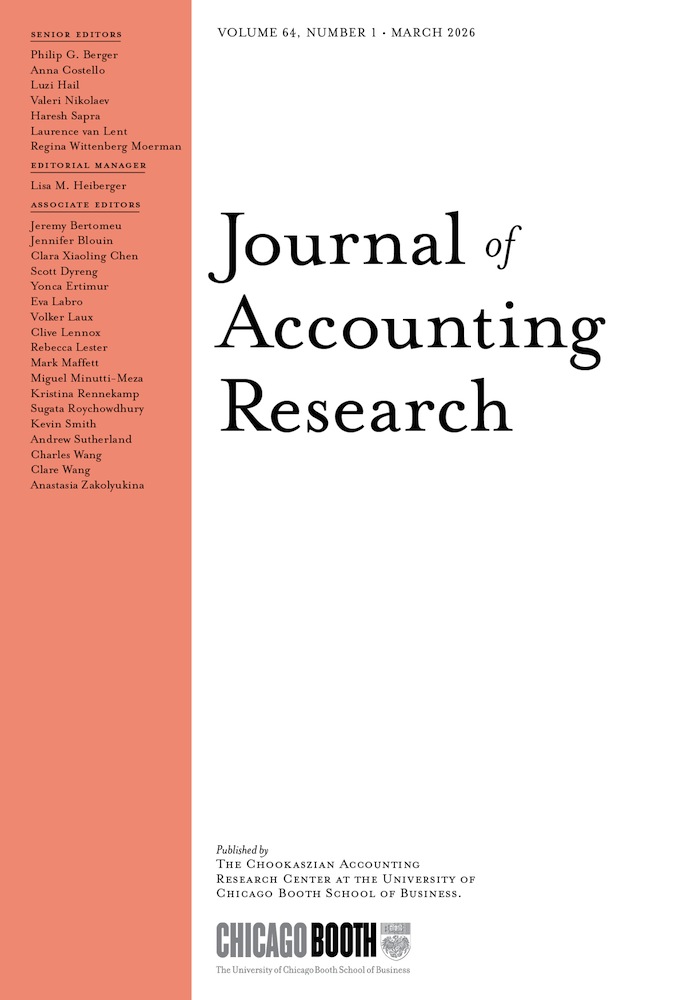
Second, there are published academic papers that read like instruction manuals for assembling a cutting-edge voice analysis system. In general, the peer-reviewed literature on this topic is well-established with roots that show decades of replication success. While the corpus of literature accelerated dramatically following the convergence of necessary technologies in 2022, it had expanded steadily prior to that time. The most recent paper in our timeline, published by the University of Chicago Booth’s Journal of Accounting Research, claims a 3.87% excess return on a model portfolio that employs their system’s capabilities. We believe that if an excess return anywhere near that number is achievable, there would be a crowd of portfolio managers wanting such a system. Indeed, there have been over 50,000 downloads for the code associated with that paper on Hugging Face.
The third reason we have no doubt this is a widely deployed capability is because of the numerous press articles, media interviews and other materials in which these capabilities are discussed at varying levels of detail. We have trouble explaining why there has not been a public outcry or why awareness of the technology is somehow still low, despite these many articles. That said, it is of note that these systems are, by their nature, operated in complete secrecy. We also can think of no advantage to be gained by operators of proprietary systems or customers of a vendor to disclose use of this capability.
How do you know that the executive health information has been compromised? Toggle answer
Part of this we know with certainty, because it was published. Researchers built a system that analyzed the earnings-call voices of public-company executives and identified, without their knowledge or consent, which of them showed vocal markers of depression. That work appeared in the Journal of Accounting Research, and it is not an outlier: it is one of several published studies extracting involuntary signal from executive conference-call audio, several of which appear in the research timeline on this page. To the researchers' credit, this work was done in the open, which is exactly why it is visible. So the question is not whether such systems exist. They verifiably do. They work. And the people who built them told the world how.
How is this any different from NLP-based sentiment analysis? Toggle answer
The core difference is that NLP-based systems examined the textual content of disclosures. The adversaries we are concerned with extract and utilize disclosure content that was produced unintentionally, information that speakers themselves are unaware they have provided. This information in voice, at the sub-perceptual level, reflects the contents of the speaker’s subconscious mind, beliefs that may not even have yet risen to the level where the speaker has introspective access to them.
If investors requested this kind of information be made public, we believe those requests would be denied and dismissed out of hand. No public executive we know would consent to investor demands for regular polygraph exams or mental and physical health screening where the results of those tests would be made public. This new voice capability is akin to both, and can be operated not only without consent, but without even the subject’s awareness. These data are extracted, utilized selectively and without disclosure. We think that puts these new voice systems in a very different category than any previously known analytical tool or technique.
Since this is relatively new technology and it may prove inaccurate, isn’t concern about the use of it premature? Toggle answer
Not at all. First, we believe the vendors in this space are highly likely to be capable of providing precisely what they claim to be able to provide. It is important to understand that this is not “new technology.” While the capability itself is newly available on consumer hardware, the understanding of the data, the analytical methodology, and many of the associated methods have existed for a long time. It is more accurate to think of voice technology not as new, but instead as newly practical or newly accessible.
The scientific basis of this capability relies on findings that are well-established and tested through replication. The extraction of voice-based cues by machine is also a technology that goes back many years. Voice analysis requires both the extraction of sub-perceptual cues and the tagging or “coding” of those cues. Until 2022, that cue coding was a laborious, manual process done in scientific labs mostly by graduate students. This could take days to process a single call. The same was generally true for transcription, which was, for a very long time, notoriously unreliable and required a manual review by a transcriptionist. Machine-learning-enabled AI systems such as Whisper and TRILLsson, both released in 2022, ushered in a completely new era in voice technology.
Additionally, if we were to partially concede the point, we would agree that there are likely to be some systems (particularly proprietary or amateur-built systems) that do not properly extract, code or attribute voice cues. That does not mean that investors operating those systems will recognize they are inaccurate or that they will not utilize the incorrect information they develop. Accurate or inaccurate, if investors are communicating or trading on the information, this means, necessarily, that an issuer’s intentional disclosure has been discounted in its importance in favor of alternative information. That is a loss of control and input by the issuer into the issuer’s own enterprise valuation.
Our team regularly receives presentation training on controlling our delivery and speaking with intent, so shouldn’t I be less concerned about this as a result? Toggle answer
No, these are signals that you did not choose to make, are not aware you are making, and can’t prevent in your own voice. These are signals produced by autonomic processes that are beyond your ability to control or recognize. They are not something anyone can hear as they are only extractable with digital signal processing techniques. It is important to understand that this new voice technology is a superhuman capability. At the same time, given our experience, we are supportive of presentation training for a variety of reasons. Among those reasons is that there are some measures of voice analysis (like Vocal Delivery Quality, VDQ) that measure perceivable paralinguistic content. Presentation training may improve those types of measures.
It is only through denial of the sub-perceptual cues in voice that you can frustrate these adversarial systems.
Since you are changing things that no one can hear and since your system leaves the voice that we hear unchanged, how do you know and how do we know that your system actually works? Toggle answer
We are happy to disclose, for potential customers, precisely how our system works, and we will share the validation information we collect to demonstrate our system’s effectiveness. What we’ve built over the past year is a very sophisticated digital signal processing system that operates on voice exclusively below the threshold of human perception. We are confident and can demonstrate that we destroy the fidelity of sub-perceptual signal in voice.
Every operation and process used by the DeCue system is based on extensive peer-reviewed scientific findings. We utilize science from nearly a dozen different, related literatures to ensure that our system achieves two equally important objectives. The first is to disrupt the sub-perceptual voice signals that we find so concerning. The second is to preserve the natural, intentional cues in voice that generate meaning.
Since your system only addresses pre-recorded audio, aren’t I still exposed to the analysis of the content in my Q&A session? Toggle answer
We degrade a system’s ability to collect useful sub-perceptual information from Q&A even though we don’t directly disrupt signals in that portion of the call. Our removal of the typically very clear sub-perceptual cues from prepared remarks prevents an adversarial system from extracting a clean baseline understanding of each speaker’s voice.
Contrary to the common belief that Q&A is the richer source of unintentional speaker information, prepared remarks are a much more vulnerable portion of the call for voice analysis systems to penetrate. Prepared remarks feature lengthy, uninterrupted, measured delivery in a high-quality recording environment. This is a nearly perfect environment to source data for a voice-analysis process. It enables a system to both establish a speaker baseline and to extract significant amounts of unintentional disclosure on a full range of subject material from an executive’s voice.
Q&A, by contrast, is more likely to contain a higher incidence of human-perceivable vocal cues, to be more difficult to analyze due to interruptions and diarization challenges, to have higher levels of background noise, and to contain voice content that lacks the length of commentary that enables the establishment of a useful vocal-performance baseline for any given speaker.
We are certainly working on a streaming capability, but there is significant processing required for scrubbing voice of its sub-perceptual information. The latency this process would introduce into streaming voice is simply too high to be useful for streaming audio.
The Threat
What is paralinguistic extraction? Toggle answer
This refers to the measurement of certain features of the qualities inherent in voice, typically derivative or compound measures of pitch, intensity and pace that provide information related to meaning. Listeners tend to perceive paralinguistics at a level the speaker intends (with pronounced paralinguistic values). Paralinguistic information produced at an automatic level can be extracted from digital voice files, revealing the state of a speaker's mental and physical condition.
How widespread is this threat? Toggle answer
Paralinguistic analysis of earnings calls has become, to the best of our knowledge, an increasingly common practice on the institutional buy side. It remains an active and growing field of academic research. Published studies have demonstrated correlations between certain voice measures and excess portfolio returns, as well as the ability to detect various health conditions, emotional states, indications of deception, and other characteristics from earnings-call audio. With over 50,000 earnings calls available as an API-ready dataset and AI models like Google TRILLsson and OpenAI Whisper making extraction and feature coding increasingly accessible, the threat is both real and accelerating.
Product
Can listeners tell the audio has been processed? Toggle answer
No. The DeCue system restricts its modifications to a rich layer of fine signal in a voice that does not reach the threshold of human perception. Only digital voice processing systems can read voice at this level of sensitivity.
Does DeCue change what the executive is saying? Toggle answer
No. The DeCue system does not change either what an executive says or the way in which those words are heard by any human listener. We change the information in a voice that, while it contains significant information, is typically only accessible by examining digital audio files and is only readily interpretable with the use of machine-learning-enabled voice systems.
Security
How secure is my audio? Toggle answer
Extremely secure. Your audio is encrypted both in transit and at rest using AES-256 encryption, and stored in a fully private AWS environment — there is no public internet path to your files at any stage of processing. Only automated systems can access your audio; no individual at DeCue can reach it unilaterally, and accessing the raw audio environment requires authorization from more than one DeCue principal. We retain original audio for 72 hours and do not store voice files or speaker profiles beyond that window.
Who at DeCue can access my recordings? Toggle answer
No one can access your recordings unless you specifically authorize us to do so. While our system does contain information about the contents of your audio conference call, those files are not reviewed by or available to any person at DeCue unless specifically directed to do so by you. We do not need to know the content of a call to verify the proper functioning of our system or to confirm your audio files have been protected. 100 percent confidential. Metadata only. No content availability.
Is DeCue SOC 2 compliant? Toggle answer
DeCue is currently in a SOC 2 compliance review process. This is a present-status description only and is not a claim of SOC 2 certification.
Technical
What audio formats are supported? Toggle answer
DeCue accepts all standard professional audio formats, including WAV, MP3, FLAC, and AAC. Your conference call provider's native output format is supported. If you have questions about a specific format, contact us.
What is the processing time? Toggle answer
DeCue processes prepared remarks and returns protected audio files within hours of submission, well within the standard earnings call preparation timeline. Exact turnaround depends on file length and queue, but same-business-day delivery is our standard commitment.
The Science
What are eGeMAPS features? Toggle answer
eGeMAPS (extended Geneva Minimalistic Acoustic Parameter Set) is a standardized set of 88 acoustic parameters widely used in computational paralinguistics research. These include measures of pitch, loudness, spectral energy, and voice quality that machine-learning systems use to infer emotional state, health markers, and cognitive load from voice. DeCue targets all 88 eGeMAPS features.
What does "sub-perceptual" mean? Toggle answer
DeCue's modifications operate below the threshold of human perception — meaning no human listener can detect that the audio has been processed. The voice sounds identical in every way that matters to human hearing while being fundamentally corrupted for machine analysis.
Is this based on peer-reviewed science? Toggle answer
Yes. DeCue's approach is built on established research across ten scientific disciplines, including linguistics, computational paralinguistics, perception studies, clinical psychology, affective computing, and machine learning.
Integration
How does this fit into our existing earnings call workflow? Toggle answer
DeCue integrates into the final stage of your prepared remarks process. After your management team has finalized and recorded their prepared remarks, the audio is uploaded through your secure DeCue portal. Protected audio is returned for use with your conference call provider. The workflow adds one step — it does not change how you prepare, rehearse, or deliver your call.
Which conference call providers are supported? Toggle answer
DeCue works with all major earnings call providers, including Notified (formerly PGi), Chorus Call, Q4, West, and others. We deliver a protected audio file in your provider's required format. If your provider isn't listed, contact us — if they accept audio files, we can support them.
Competitive
Who else does this? Toggle answer
No one. DeCue is the first and only system specifically designed to neutralize AI-extractable paralinguistic signals from executive voice while preserving the audio's perceptual quality. Voice encryption makes audio unintelligible; voice alteration changes how a speaker sounds. DeCue does neither. It corrupts the sub-perceptual data layer that machine-learning systems exploit while leaving the voice indistinguishable to every human listener.
How is this different from voice encryption? Toggle answer
Voice encryption makes audio unlistenable without a decryption key — it's designed for secure transmission. DeCue's purpose is fundamentally different: the protected audio is meant to be heard publicly, broadcast on your earnings call, and filed with the SEC. It sounds identical to unprotected audio. The difference is invisible to humans and devastating to AI extraction systems.
Results
How do we know it worked? Toggle answer
Every processed file is delivered with a Protection Report — a detailed breakdown of the modifications applied across all 88 eGeMAPS features and MFCC layers 1–14. The report confirms that modifications were applied, that they fall below the threshold of human perception, and that the protected file is forensically reproducible from its deterministic seed.
What's in the Protection Report? Toggle answer
The Protection Report is focused on disruption metrics, before/after analysis summaries, and a confirmation that all modifications fall within sub-perceptual parameters. It does not contain a transcript of the call. It provides everything you need to verify protection without exposing the content of your remarks.
Legal & Compliance
Can we use DeCue'd audio for SEC filings? Toggle answer
Yes. DeCue does not alter the words spoken, the meaning conveyed, or the audible quality of the recording. The protected audio is a faithful representation of what was said, suitable for any regulatory filing that accepts audio of prepared remarks. Consult your legal counsel for your specific filing requirements.
Does this affect our Safe Harbor protections? Toggle answer
DeCue strongly recommends that you add a short statement to your Safe Harbor provisions clarifying that sub-perceptual voice signals in the audio broadcast of your call have been modified to protect against the provision of unintended information and protect against the extraction of private personal health information. Please consult your securities counsel (or ask to speak with ours) to decide on the right specific language for your quarterly disclosures. We have provided suggested language:
“Listeners are cautioned that today’s call has been protected by advanced signal-processing techniques that do not change the presenters’ voices as perceived by the human ear but corrupt sub-perceptual paralinguistic data contained in those voices—data that are private to today’s presenters and neither intended nor appropriate for public disclosure.”